
Franchise Economics: Margin Structure in Project-Based Models
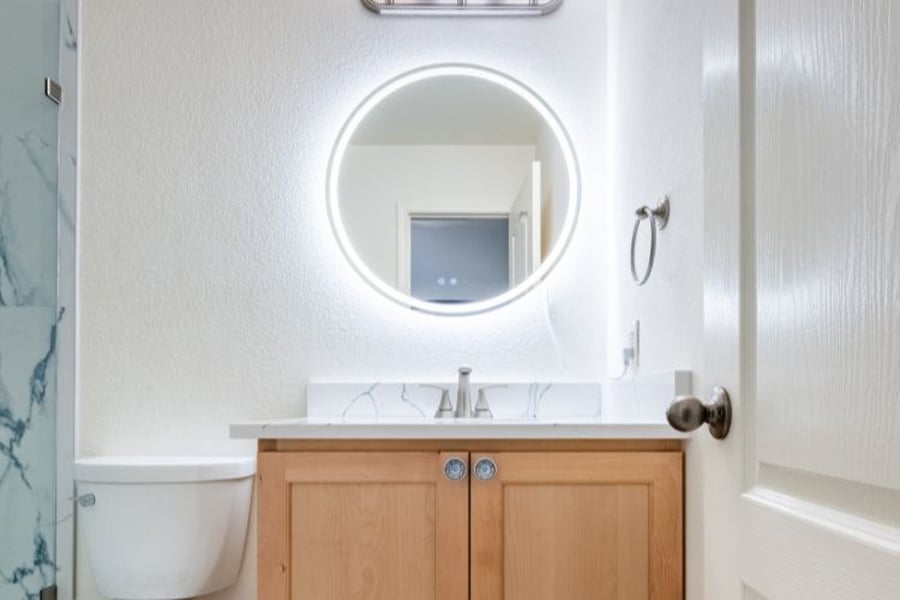
Defined, franchise economics is the way a franchise business generates income, manages their expenses, and ultimately turns a profit. A strong economic foundation is an important part of any business model and plays a key role in the success of your operations. Learn how franchise economics works in a bath remodeling business, what impacts margins and cash flow, and why smaller projects can lead to more predictable revenue.
Understanding Franchise Economics in Remodeling
To understand the franchise economics definition in a remodeling business, it’s important to look at how each project generates revenue, manages costs, and maintains consistent cash flow.
Every project brings in revenue, but it also comes with costs. For example, in residential construction and remodeling, labor alone can account for 20% to 40% of total project costs, depending on project complexity. The longer a project takes, the harder it becomes to control those costs and protect your margins.
This is why project structure is important. Large, custom remodels often involve longer timelines, more moving parts, and greater uncertainty. In contrast, smaller projects are easier to plan, price, and execute.
Where Margins Get Squeezed in Large Renovation Projects
Larger renovation projects can be a higher financial risk for business owners. Long timelines, increased labor costs, material price fluctuations, and scope changes can all quickly eat into your margins.
Industry data shows that construction input prices can fluctuate significantly, with material cost volatility being a common challenge for contractors. March 2026 figures from the Bureau of Labor Statistics’ Producer Price Index show a nearly 5% surge in the cost of construction materials.
Plus, payments are typically delayed until later in the renovation process, meaning you must float expenses for longer periods of time. Together, the combination of higher costs and slower cash flow makes it more difficult to manage strong margins. However, this is not a common issue with smaller projects.
Why Smaller Projects Can Drive More Predictable Revenue
A big advantage of smaller, more targeted remodeling projects is their predictability. Shorter-duration projects reduce exposure to scheduling delays and cost overruns: two of the most common risks in construction project management.
With smaller projects, there’s quicker invoicing and faster payment turnaround. With less time between starting a project and getting paid, franchise owners can maintain more consistent cash flow and take on new work sooner.
Together, these factors create a more stable and predictable revenue model. Rather than relying on a few large, high-risk projects, franchise owners can build consistency through steady project flow, which is one of the key franchise advantages in a project-based remodeling business.
Labor Efficiency and Cost Control in Franchise Models
Labor is one of the most significant cost drivers in any remodeling business. According to the National Association of Home Builders, labor shortages and inefficiencies remain one of the top challenges impacting builder profitability, making efficient crew utilization critical.
Several factors have the biggest impact on labor expenses:
- Time on site: The longer the crew is on site, the more labor costs begin to add up.
- Project disorganization: Projects that are delayed due to unclear scopes or poor planning require more labor hours, which costs you more money in the end.
- Mix of workers: Employing highly skilled workers—while necessary—will cost you more. When they’re pulled into projects that could be handled more efficiently, it can reduce your productivity and profitability.
However, franchise models address these challenges through structure and consistency. With defined processes, standardized workflows, and ongoing training, franchise owners can execute projects with more efficiency and fewer mistakes. Additionally, with repeatable project types (like targeted bathroom updates) crews become more skilled and precise over time, reducing labor hours.
Expanding Opportunity Within a Single Home
Remodeling isn’t necessarily a recurring business. Renovation and remodeling businesses don’t rely on repeat customers like food service or retail franchises. Typically, once a project is done, that’s it.
However, most homes have multiple bathrooms, allowing franchise owners to formulate a phased approach with customers. In residential remodeling, repeat work within the same household is often more cost-efficient than acquiring new customers, since it reduces marketing spend and shortens the sales cycle.
After completing a high-quality remodel in one bathroom, franchisees can pitch the option of renovating other bathrooms in the home. By making additional upgrades over time, franchise owners establish trust with customers, which then leads to repeat business and referrals.
Why Franchise Models Create More Consistent Revenue Streams
The main point here: Consistency. Rather than chasing large, unpredictable projects, focus on completing a high quantity of smaller jobs. Many small business owners in project-based industries prioritize predictable workflow over project size, as consistent job flow can help stabilize revenue and operational planning over time.
These smaller projects—like targeted bathroom remodels—are repeatable services, allowing you to manage multiple projects in one household. This creates a more dependable pipeline of work. Instead of starting from scratch with every new customer, franchise owners can build on existing relationships.
Why Bath Tune-Up Aligns with These Franchise Economics
Bath Tune-Up is designed to align with the core principles of franchise economics—efficiency, consistency, and predictability. Rather than focusing on large, complex projects, our model emphasizes smaller, targeted bathroom upgrades that can be completed on shorter timelines and with greater operational control.
Additionally, the lower overhead nature of our business model makes it more accessible for many entrepreneurs. At Bath Tune-Up, our franchise startup costs are affordable. With an investment range of $106,930 to $183,850 (including a $64,950 initial franchise fee), Bath Tune-Up provides an accessible entry point into the remodeling industry. Additionally, Bath Tune-Up offers $36,000 in-house financing to qualified franchisees.
If you’re exploring franchise ownership and want to better understand how operational structure impacts financial performance, Bath Tune-Up offers a model built around efficiency and consistency.
To get started with Bath Tune-Up, inquire now. Once we’ve received your information request, one of our franchise advisors will be in touch with you to discuss the next steps.